
The World Anti-Doping Agency has just published the 2017 prohibited list.
The 2017 Prohibited List was published by WADA. A vintage which emphasizes beta2-agonists (asthma) and which places codeine under surveillance.
It will be effective on 1er next january.
The reference document

"WADA is pleased to publish the 2017 Prohibited List," said Sir Craig Reedie, President of WADA. It is one of the five International Standards that all the signatories of the World Anti-Doping Code (the "Code") are required to comply. All athletes everywhere are expected to abide by these rules, and there will be no tolerance for those who intentionally break them. Updated annually, the List is published three months before its effective date so that all partners - in particular athletes and members of their entourage - have sufficient time to familiarize themselves with the document and the changes that occur. were made there. "
« The Prohibited Listsays Olivier Niggli, Director General of WADA, follows a very rigorous nine-month review process by the partners. Experts reviewing the List take into account a variety of sources, including scientific and medical studies, trends, and intelligence obtained from law enforcement and pharmaceutical companies, in order to stay ahead of cheaters. It is essential that all Athletes take the time to consult the List and contact their respective Anti-Doping Organizations (ADOs) if they are in any doubt about the status of a substance or method. "
Beta2-agonists in the crosshairs
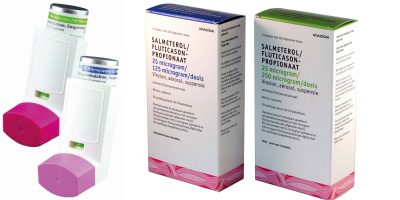
The 2017 version focuses on beta2-agonists, molecules used to fight, in particular, against asthma. Thus, salbutamol, formoterol and salmeterol, already present in the 2016 version, are now accompanied by fenoterol, terbutaline or vilanterol. WADA took this opportunity to recall the authorized dosages and insisted on the fact that studies were underway to establish an appropriate threshold for urinary concentration for inhaled salmeterol. We also note the appearance of higenamine, a product frequently found in food supplements. Higenamine is a fat burner beta-stimulant and was the source of the suspension, before his full rehabilitation, of French international footballer Mamadou Sakho. The substance itself was not, then, listed by name. It is today.
Codeine under surveillance
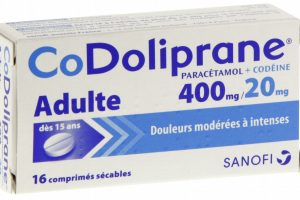
Among the novelties brought by this list, it is advisable to announce the putting under surveillance of codeine. Not appearing on the prohibited list, codeine belongs to the narcotic family and can, by degrading, leave traces of morphine leading, if doping control, a positive result. Before appearing on the 2016 banned list, Meldonium, the cause, in particular, of the suspension of tennis player Maria Sharapova, had also been placed under surveillance. The 2017 list will come into force on 1er next january.
To go further: three questions for Doctor Jacomet, Member of the Monegasque Anti-Doping Committee
Beta-2-agonists are drugs that dilate the alveolar bronchioles and therefore allow better breathing by ultimately increasing the arrival of oxygen to the tissues. There is no doubt that these are doping products since they improve performance.
The existence of asthma occurring with intense exertion is proven. It legitimizes the authorization issued to certain athletes to take three of them: salbutamol, formoterol and salmeterol in a restricted and controlled manner by the World Anti-Doping Code.
Codeine is a weak pain reliever. However, the search for an analgesic effect, weak or strong, contributes to improving performance since pain is a limiting factor in performance. In addition, codeine can mask the intake of morphine, a powerful analgesic, by causing the two molecules to appear simultaneously in the urine in the laboratory. However, one is transformed into the other, in small proportion of course, but ultimately very little codeine is sufficient to mask an intake of a large quantity of morphine.
Because codeine is a part of many regular flu medications, it cannot be banned outright. It is normal to place it under surveillance as a warning to deter misuse.
The exact effects of higenamine or norcoclaurine are not really known. Like many molecules extracted from plants, its pharmacology will be written with much delay. The reason for banning its consumption is that if athletes use it, it must have a doping effect! Exploring the effects of a new molecule about which nothing is known may take ten to twenty years. In the meantime, the World Anti-Doping Agency takes the decision to ban it in order to preserve the health of the athlete as much as to prevent doping use. The mere fact that its chemical structure is related to amphetamines is a justification for the authorities' caution.
